

Lathe machine manufacturer in rajkot - how to select lathe machine.
How to Choose the Right Lathe Machine? – A Complete Buying Guide
Introduction
A lathe machine is one of the most essential machines in any engineering workshop, manufacturing unit, maintenance department, or tool room. Selecting the right lathe machine is crucial because it directly affects machining accuracy, productivity, operating costs, and the overall efficiency of your business.
With many models and specifications available in the market, choosing the right machine can be challenging. This guide will help you understand the key factors to consider before purchasing a lathe machine.
1. Understand Your Machining Requirements
Before selecting a lathe machine, identify the type of work you will be performing.
Common applications include:
- General Turning
- Shaft Machining
- Thread Cutting
- Heavy Duty Machining
- Tool Room Jobs
- Maintenance Work
- Batch Production
- Custom Component Manufacturing
Choosing the right machine according to your application ensures better performance and long-term productivity.
2. Select the Appropriate Swing Over Bed
Swing Over Bed determines the maximum diameter of the workpiece that can rotate over the bed.
Typical sizes include:
- 12" – Small and medium jobs
- 15" – General workshop applications
- 18" – Medium-duty industrial work
- 20" & Above – Heavy industrial applications
Always select a machine that can handle both your current and future job requirements.
3. Choose the Correct Distance Between Centres
The Distance Between Centres defines the maximum length of the workpiece the machine can accommodate.
Popular sizes include:
- 1000 mm
- 1500 mm
- 2000 mm
- 3000 mm
- 4000 mm
For long shafts and rollers, choose a machine with a longer centre distance.
4. Consider Bed Construction and Rigidity
The machine bed is the backbone of a lathe machine.
A heavy-duty bed provides:
- Higher machining accuracy
- Better surface finish
- Less vibration
- Longer machine life
- Improved tool life
A rigid machine performs consistently even during heavy cutting operations.
5. Check the Spindle Bore
Spindle Bore determines the maximum bar diameter that can pass through the spindle.
Common spindle bore sizes include:
- 38 mm
- 52 mm
- 65 mm
- 80 mm
- 104mm
- 125mm etc…
If your work frequently involves long bars or pipes, a larger spindle bore is recommended.
6. Select the Right Motor Power
Motor power should match your machining requirements.
Typical options include:
- 2 HP – Light-duty work
- 3 HP – Medium-duty applications
- 5 HP – Heavy machining
- 7.5 HP & Above – Industrial production
Choosing the correct motor ensures smooth operation and higher productivity.
7. Evaluate the Spindle Speed Range
A wide spindle speed range increases machining flexibility.
Low speeds are suitable for:
- Large diameter jobs
- Heavy cutting operations
High speeds are ideal for:
- Small diameter components
- Precision finishing
- Fine machining
8. Verify Thread Cutting Capabilities
If thread cutting is part of your work, ensure the machine supports:
- Metric Threads
- Inch Threads
- Module Threads
- DP Threads
A versatile gearbox saves time and improves machining efficiency.
9. Examine the Feed Mechanism
A high-quality feed mechanism provides:
- Smooth machining
- Better surface finish
- Reduced tool wear
- Higher production efficiency
Automatic longitudinal and cross feeds are highly recommended for production work.
10. Check Standard Accessories
A complete machine package reduces additional investment.
Standard accessories may include:
- 3 Jaw Self-Centering Chuck
- 4 Jaw Independent Chuck
- Face Plate
- Steady Rest
- Follow Rest
- Tool Post
- Dead Centres
- Thread Dial Indicator
- Change Gear Set
- Coolant System
- Machine Lamp
- Tool Kit
Always compare the accessories included by different manufacturers.
11. Machine Accuracy Matters
Accuracy is one of the most important factors when purchasing a lathe machine.
Ensure the machine offers:
- Precision Ground Bed
- High-Quality Spindle Bearings
- Accurate Tailstock Alignment
- Smooth Lead Screw Operation
- Excellent Surface Finish
Higher accuracy means better quality finished components and reduced rejection rates.
12. Spare Parts & After-Sales Service
A reliable manufacturer should provide:
- Easy availability of spare parts
- Technical support
- Installation assistance
- Prompt service
- Operator guidance
Strong after-sales support minimizes machine downtime.
13. Choose a Trusted Manufacturer
Before making your final decision, evaluate the manufacturer based on:
- Industry experience
- Manufacturing quality
- Customer reviews
- Technical expertise
- Service network
- Product warranty
Buying from an experienced manufacturer ensures long-term reliability.
Why Choose YUG Machine Tools?
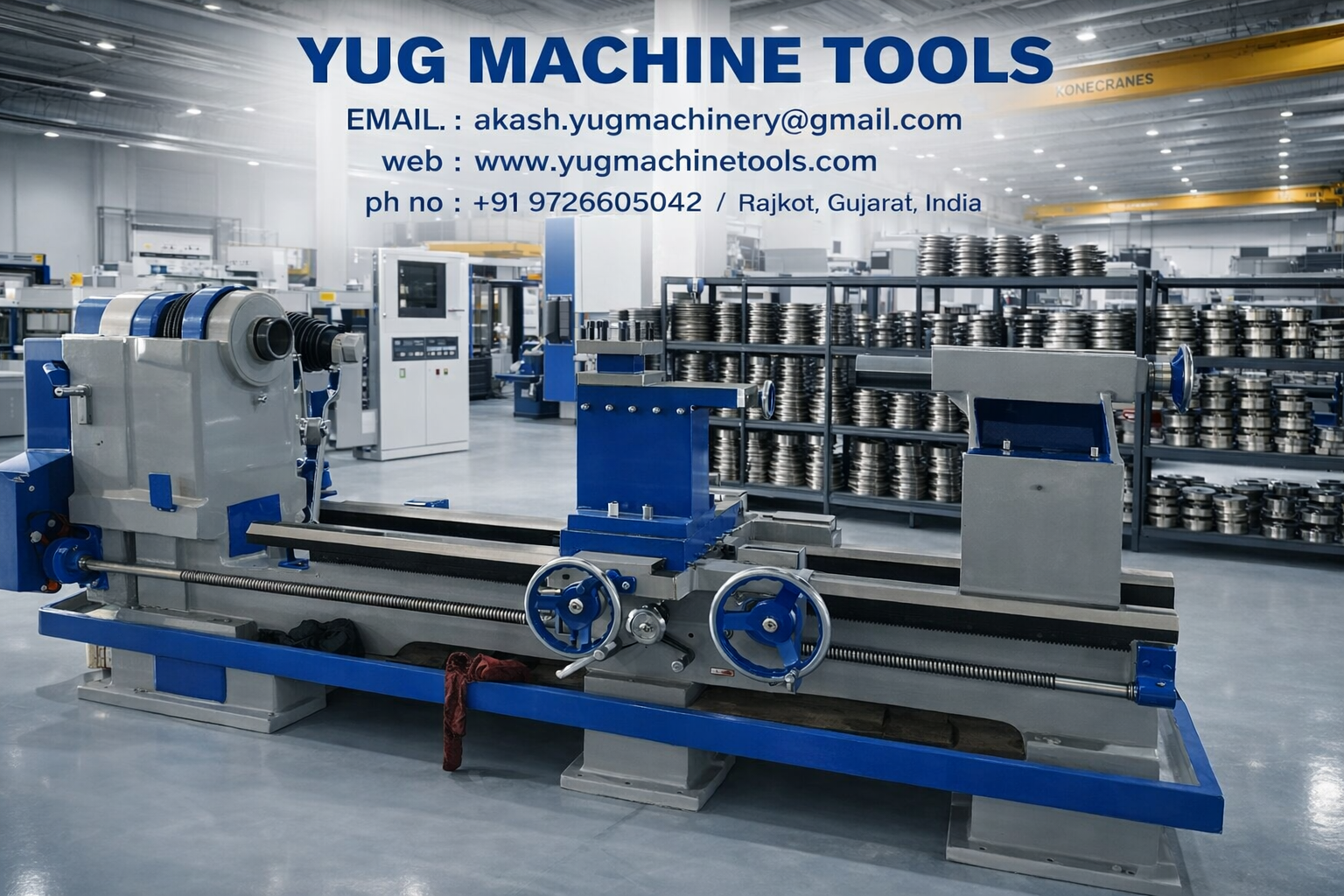
YUG Machine Tools, based in Rajkot, Gujarat, is a trusted manufacturer of high-quality workshop machinery. We manufacture a wide range of lathe machines designed for precision, durability, and industrial performance.
Our product range includes:
- Medium Duty Lathe Machine
- Heavy Duty Lathe Machine
- All Geared Lathe Machine
- Extra Heavy Duty Lathe Machine
- Custom-Built Lathe Machines
Key Features of Our Machines
- Heavy-duty rigid construction
- Precision ground bed
- High machining accuracy
- Premium quality components
- Long service life
- Excellent after-sales support
- Competitive pricing
- Reliable performance for industrial applications
Conclusion
Choosing the right lathe machine is not just about the price—it is about selecting a machine that matches your production requirements, provides long-term reliability, and delivers consistent machining accuracy.
By considering factors such as machine capacity, swing over bed, distance between centres, spindle bore, motor power, machine rigidity, accessories, accuracy, and after-sales support, you can make a smart investment that enhances your workshop's productivity for years to come.
If you are looking for a reliable and high-performance lathe machine, YUG Machine Tools is your trusted manufacturing partner, offering quality machines backed by expert technical support and dependable service.